




読み込み中…
459 種類のワークフローで、アクセス推計・機能・代替製品を比較できます。
“parallel experiments” · 画像認識・解析·8 件
最初から

Voxel51 is the data platform for physical AI, built on the open-source FiftyOne library. It helps computer vision and robotics teams search, visualize, curate, annotate, and evaluate multimodal datasets — images, video, 3D scenes, and sensor streams — so they can find where models fail and fix the data behind them.
Voxel51 is the data platform for physical AI, built on the open-source FiftyOne library. It helps computer vision and robotics teams search, visualize, curate, annotate, and evaluate multimodal datasets — images, video, 3D scenes, and sensor streams — so they can find where models fail and fix the data behind them.



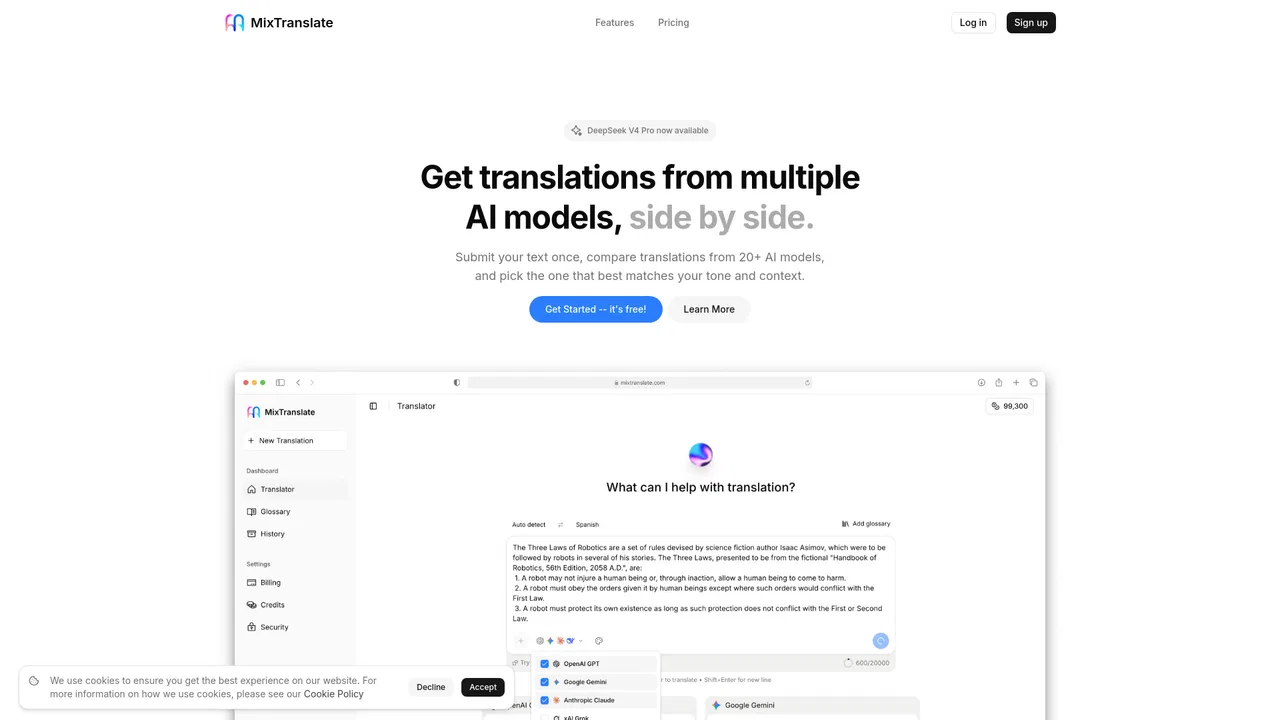
MixTranslate is a free-to-start AI translator that runs your text through more than 20 AI models and translation engines, then picks the version that best fits your tone and context. It handles text, images, documents, audio and live websites, and adds glossary and tone controls so terminology stays consistent across a project.
MixTranslate is a free-to-start AI translator that runs your text through more than 20 AI models and translation engines, then picks the version that best fits your tone and context. It handles text, images, documents, audio and live websites, and adds glossary and tone controls so terminology stays consistent across a project.
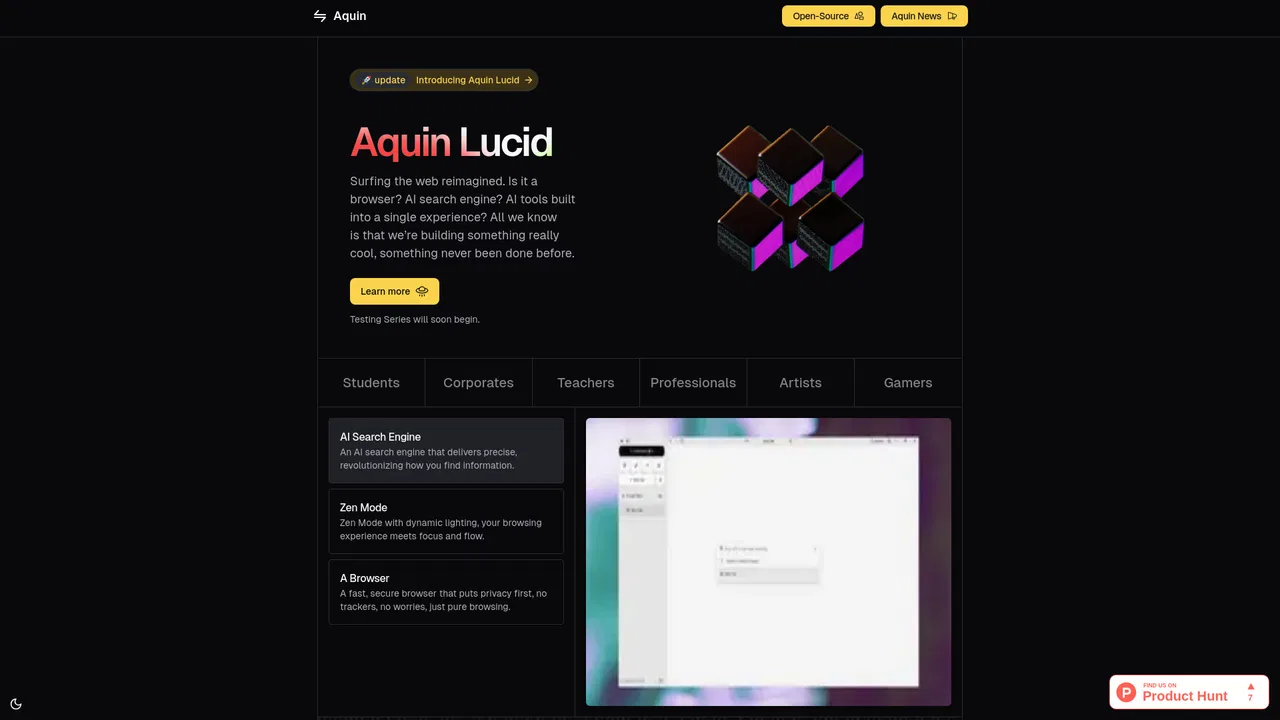
Aquin (Aquin Labs) is an AI research organisation working on interpretability and applied prediction. Its core project, Aleph, is positioned as a universal predictor for applied ML, data science and annotation work, producing schema-bound outputs such as probabilities, labels, boxes and scores that programs can consume. Alongside it the lab publishes research on attention circuits, weight editing and self-learning developer agents.
Aquin (Aquin Labs) is an AI research organisation working on interpretability and applied prediction. Its core project, Aleph, is positioned as a universal predictor for applied ML, data science and annotation work, producing schema-bound outputs such as probabilities, labels, boxes and scores that programs can consume. Alongside it the lab publishes research on attention circuits, weight editing and self-learning developer agents.