179.3万/月+14.2%
专项更强无需代码,构建自定义 AI 智能体与工作流
定价请咨询
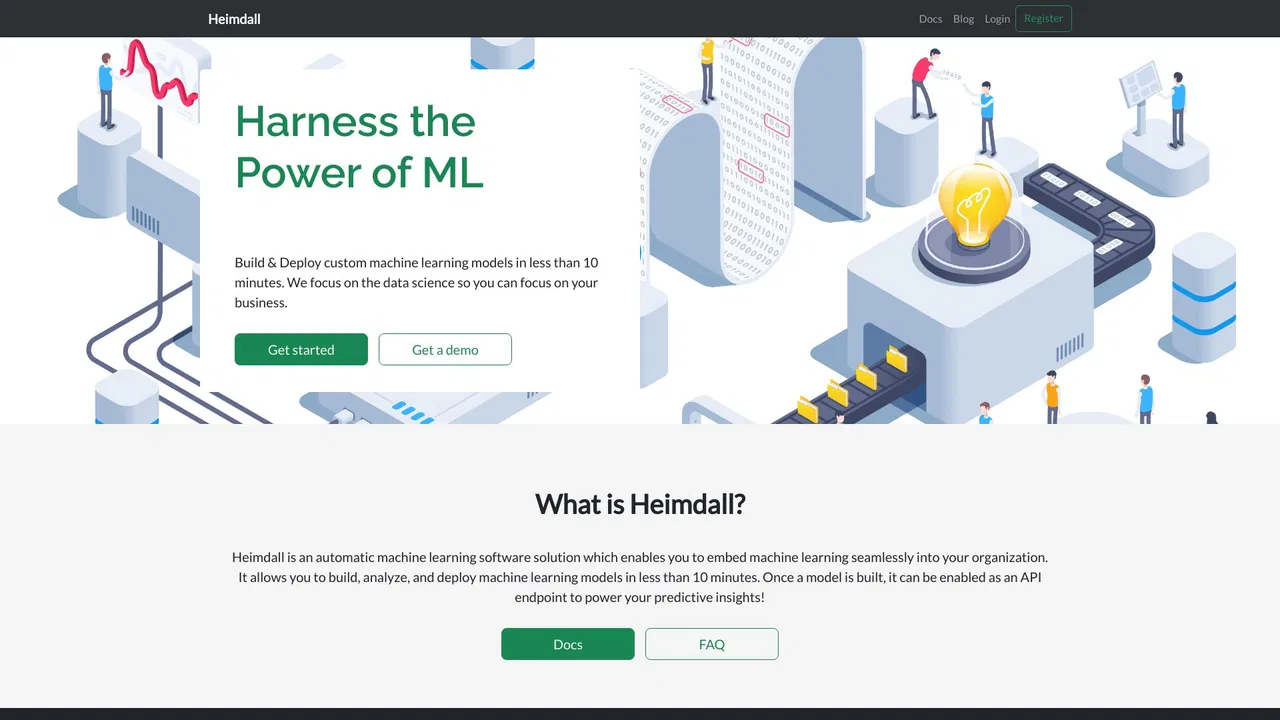
把无代码机器学习与云端数据湖合为一体的平台
网站月访问量估算
数据为该域名的 Similarweb 流量估算,不是活跃用户数。仅展示有数据的统计月份;采集时间与流量统计月份分别标注。
采集于 2026年11月11日
这是编辑给出的评估,满分 5 分,不是用户打分的平均值。 本页的各方观点由 AI 根据产品信息归纳,不是真实用户的评价。
根据 OpenAITools.app 于 2026-11-11 核对的流量数据,Heimdall(heimdallapp.org)是一个收录在 No-Code&Low-Code 下的 AI 平台,月访问量为 1493,月度环比流量变化为 +156(+11.7%)。其主要地理市场为意大利(71.7% 流量份额),采用定价请咨询定价模式。按月流量计算的主要竞争替代方案包括 MindStudio(179.33万次访问/月),Plat.AI(6194 次访问/月),Faraday(1.37万次访问/月)。
把 CSV 变成预测 API 的流程挺顺畅的。
湖仓一体加 Lab 笔记本很好用。
企业版定价有点神秘,不给明细。
在线学习 loop 省了好多自己写代码的时间!
以下短评基于实时网页探查、定价机制与同类产品基准由 AI 综合模拟生成,旨在呈现不同使用场景下的常见槽点与亮点,非实名真实用户评价。
摄取结构化与非结构化数据,按铜、银、金三层组织,并发布可供下游模型训练的金层表。
用 Python、pandas 和图表剖析数据湖中的表,再把转换结果保存回银层,全程无需离开浏览器工作区。
训练分类与回归模型,或生成可解释的时间序列预测,每个模型都各自部署为受监控的 REST API 端点。
无需数据集即可开始,让模型持续从新的实时信号中自我更新,适合排序、推荐与自适应评分。
用你自己撰写的答案定义把非结构化文本转成选项或分数,无需标注训练历史。
Heimdall 围绕两种截然不同的起点来组织机器学习。第一种是经典数据路径:你带来 CSV 文件或连接数据库,在 Lake 中按铜、银、金三层进行摄取与版本管理,在 Lab 中用 Python 笔记本探查和剖析数据表,再发布供 ML 与 Forecast 训练的金层表。ML 负责分类与回归,Forecast 生成可用于需求与产能规划的时间序列预测,并提供可查看的解释。每个模型最终都会成为一个带用量计量与健康检查的受监控 REST 端点。
第二种路径面向尚无训练数据的团队。Loop 是在线学习产品,其模型会持续适应新的实时反馈而非固定训练集,适合推荐与排序类问题。Resolve 把非结构化文本转成类别或分数,使用的是你自己定义的答案,无需标注历史数据,因此适合邮件分流或紧急度打分。两条路径最终都落到同一套可部署、可监控的 API 上。
由于平台把编目、笔记本、建模与部署打包在一起,它适合希望在无需拼装独立数仓、笔记本与 MLOps 供应商的情况下实现生产级机器学习的小型数据团队。开始使用只需免费账户与自助工作区;更大规模的部署需与团队沟通,因此官网未公开标价。
在 Lake 与 Lab 中合并历史成交记录与房屋属性,再发布一个通过 API 返回价格估算的回归模型。
用 Resolve 按你定义的答案把每条来信送到正确队列,省去数月的人工打标。
在金层订单或预约表上训练 Forecast,获得可直接调用、可解释的时间序列预测,用于规划人力与资源。
把摄取、笔记本、建模与端点监控集中在一个工作区,而非拼接数仓、笔记本托管与独立部署工具。
同一分类下同类 AI 工具的流量并排对比
| 排名 | AI 工具 | 月访问量 | 月度环比增长 | 直接流量占比 | 定价 | 头对头 |
|---|---|---|---|---|---|---|
| ● | Heimdall | 1493 | +11.7% | 39% 直接流量 | 定价请咨询 | 当前产品 |
| 1 | MindStudio | 179.33万 | +14.2% | 12% 直接流量 | 定价请咨询 | 对比 MindStudio |
| 2 | Plat.AI | 6194 | +48.9% | 39% 直接流量 | 免费试用,定价请咨询 | 对比 Plat.AI |
| 3 | Faraday | 1.37万 | -0.2% | 40% 直接流量 | 免费增值,免费 | 对比 Faraday |
| 4 | Xano | 7.73万 | -20% | 43% 直接流量 | 免费增值 | 对比 Xano |
| 5 | Hex | 78.27万 | +10.8% | 79% 直接流量 | 免费增值,免费试用,付费,定价请咨询,免费 | 对比 Hex |
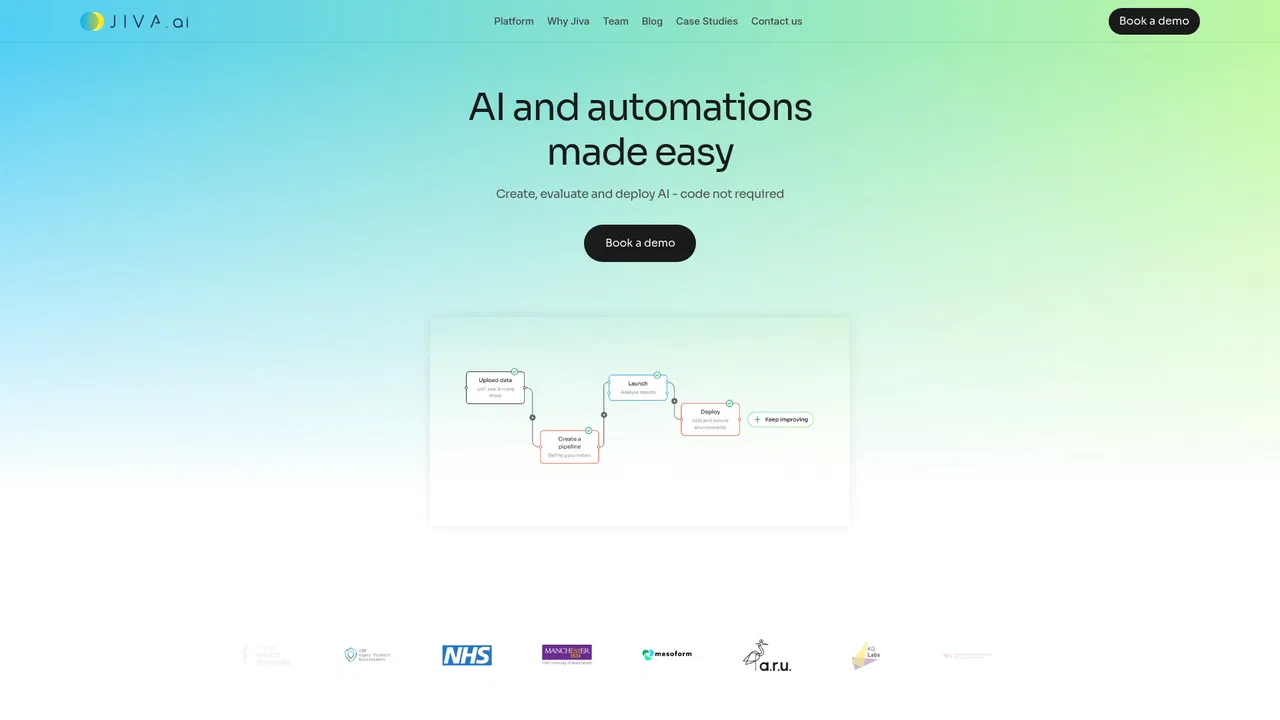
| 6 | Jiva.ai | 4171 | +3% | 39% 直接流量 | 免费增值 | 对比 Jiva.ai |
专项更强无需代码,构建自定义 AI 智能体与工作流

专项更强Xano is a backend platform for building, running and governing apps, APIs and MCP servers. You can design server-side logic visually, in XanoScript or with coding agents such as Claude, Cursor and ChatGPT, then test, deploy and observe everything on managed Postgres and Kubernetes infrastructure.
专项更强Xano is a backend platform for building, running and governing apps, APIs and MCP servers. You can design server-side logic visually, in XanoScript or with coding agents such as Claude, Cursor and ChatGPT, then test, deploy and observe everything on managed Postgres and Kubernetes infrastructure.

专项更强把问题转化为可信、可治理答案的 agentic 数据分析平台
用你自己的数据训练并部署 AI 模型,无需写代码

专项更强Graphite Note is a decision intelligence platform that combines AutoML, causal machine learning and optimisation around specific business decisions. Instead of stopping at dashboards, it recommends the next action — which promotion to repeat, where to place inventory, which customers to target — and estimates the expected business impact.
专项更强Graphite Note is a decision intelligence platform that combines AutoML, causal machine learning and optimisation around specific business decisions. Instead of stopping at dashboards, it recommends the next action — which promotion to repeat, where to place inventory, which customers to target — and estimates the expected business impact.
专项更强面向后端 API 与自动化的 AI 可视化工作流构建器
可自由改造成任意应用的无代码跨平台数据库

专项更强Superflows is an AI assistant framework that lets B2B SaaS and software companies embed a copilot directly into their own product. The assistant calls your APIs to fetch data, writes code to crunch numbers for analytics answers, and can prepare and take actions on a user's behalf after confirmation. It reads your documentation to answer product questions, and you connect it with an OpenAPI spec plus one line of front-end code.
专项更强Superflows is an AI assistant framework that lets B2B SaaS and software companies embed a copilot directly into their own product. The assistant calls your APIs to fetch data, writes code to crunch numbers for analytics answers, and can prepare and take actions on a user's behalf after confirmation. It reads your documentation to answer product questions, and you connect it with an OpenAPI spec plus one line of front-end code.