01
PineconeOfficial
286.7K/mo
The managed vector database and knowledge engine for production AI
AI APIEditorial score: 4.8Freemium, Paid, Contact for Pricing41% direct

Graph database built on object storage for agent memory and context
Estimated monthly website visits
Similarweb estimates for this domain, not active users. Only available observation months are shown; collection date is separate from the traffic period.
Collected Nov 11, 2026

This is our editors' assessment out of 5, not an average of user ratings. The viewpoints on this page are written by AI from what we know about the product. They are not customer reviews.
According to OpenAITools.app telemetry verified on 2026-11-11, HydraDB OSS (hydradb.com) is an AI platform indexed under Graph AI generating 29.64K monthly visits with a month-over-month traffic delta of +1.61K (+5.8%). Its primary geographic market is India (65% traffic share), and it operates on a Freemium, Contact for Pricing pricing model. Top competing alternatives by monthly volume include Pinecone (286.73K visits/mo), Qdrant (72.99K visits/mo), Polygres (4.02K visits/mo).
Object storage native graph DB that doesn't cost a fortune. Absolutely killer for agent memory.
OpenCypher support makes migration from Neo4j trivial.
Blazing fast traversal on S3 backend.
Docs on custom temporal versioning could be clearer.
AI-synthesized perspectives grounded in live site inspection, pricing structure, and category benchmarks — presented as editorial viewpoints rather than individual customer testimonials.
Graph, WAL, value, and index data all live in S3-compatible storage with a hot/warm/cold tiering strategy, cutting infrastructure cost dramatically versus memory-resident graph databases.
One query can traverse graph relationships and run vector, BM25, and reranked search together, so agents do not have to orchestrate four separate systems.
Every change is tracked, letting agents recall what happened, when, and in what sequence, which supports auditability and long-running agent workflows.
OpenCypher over Bolt plus an HTTP API and SDKs make it approachable for teams already familiar with property graphs.
Ontology suggestions and entity resolution help teams build usable knowledge graphs without hand-designing every schema relationship.
HydraDB OSS is an open-source graph database designed for the memory and context layers of AI agents. Rather than stitching together a vector database, a graph store, and a relational database, it puts entities, relationships, traces, and preferences into a single graph that lives on object storage. The result is a database whose storage cost scales like S3 while queries stay fast enough for interactive agents.
The architecture separates write, index, and read nodes: Cypher writes land in a write-ahead log, an indexer builds GraphBLAS-backed indexes, and readers merge the index with pending WAL entries for strong consistency. Tiered storage moves hot data from in-memory cache to NVMe to cold object storage on demand. Built-in retrieval combines graph traversal with vector, BM25, and reranking so a query like "what breaks if I change this function" can be answered in a single call.
HydraDB OSS ships under an open-source license, so teams can self-host on any S3-compatible store, import graphs from other databases, and use the supplied SDKs and an HTTP API. The same engine is offered as a managed cloud service for teams that would rather not operate the cluster themselves. Helpful extras include assisted ontology creation, entity resolution, and temporal versioning that tracks what changed and when.
Store conversations, decisions, and preferences in a graph so agents pick up context across sessions instead of starting from scratch each run.
Connect documents, services, ownership, and tickets into a single brain that answers questions spanning multiple systems.
Combine traversal with hybrid search to retrieve related facts rather than merely similar passages, improving answer precision on complex questions.
Grow graph size without tying storage to expensive database volumes, using object storage as the durable backend.
Side-by-side telemetry comparison of competing AI tools in the same primary category
| Rank | AI Tool | Monthly Visits | MoM Growth | Direct traffic share | Pricing | Head-to-Head |
|---|---|---|---|---|---|---|
| ● | HydraDB OSS | 29.64K | +5.8% | 58% direct | Freemium, Contact for Pricing | Current |
| 1 | Pinecone | 286.73K | -31% | 41% direct | Freemium, Paid, Contact for Pricing | vs Pinecone |
| 2 | Qdrant | 72.99K | -38.4% | 60% direct | Freemium, Contact for Pricing | vs Qdrant |
| 3 | Polygres | 4.02K | -52.3% | 40% direct | Freemium | vs Polygres |
| 4 | supermemory | 156.58K | -7.7% | 45% direct | Contact for Pricing | vs supermemory |
| 5 | EverMemOS | 24.24K | +12% | 60% direct | Free Trial, Free | vs EverMemOS |
| 6 | Zilliz | 108.89K | -16.4% | 34% direct | Freemium, Paid, Free, Contact for Pricing | vs Zilliz |
The managed vector database and knowledge engine for production AI
Free / Open-sourceOpen-source, high-performance vector search at any scale
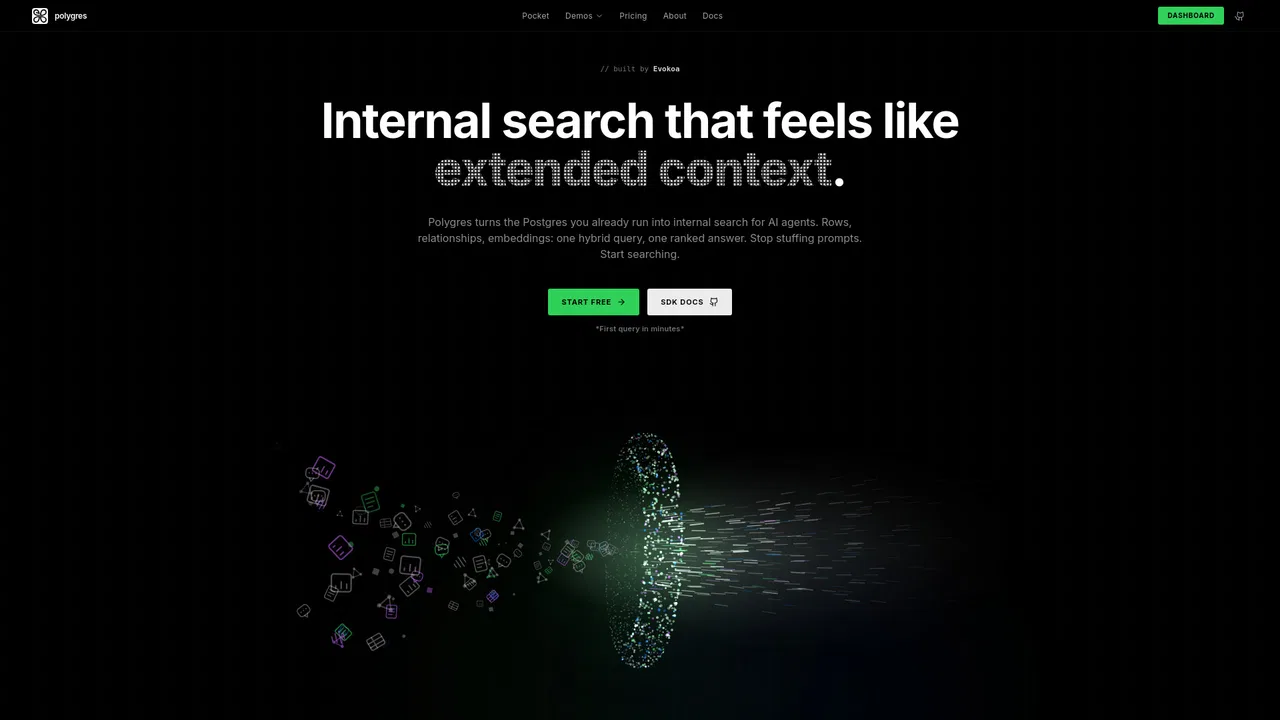
Graph, vector and text retrieval for AI agents on your Postgres
Graph, vector and text retrieval for AI agents on your Postgres
A memory and continual-learning engine that gives any AI agent persistent context
A memory and continual-learning engine that gives any AI agent persistent context

Free / Open-sourceThe memory operating system for AI agents

Fully managed Vector Lakebase and vector database for enterprise AI, built by the creators of Milvus
Fully managed Vector Lakebase and vector database for enterprise AI, built by the creators of Milvus

Free / Open-sourceOpen-source RAG platform for reliable AI chat and search
Free / Open-sourceOpen-source RAG platform for reliable AI chat and search

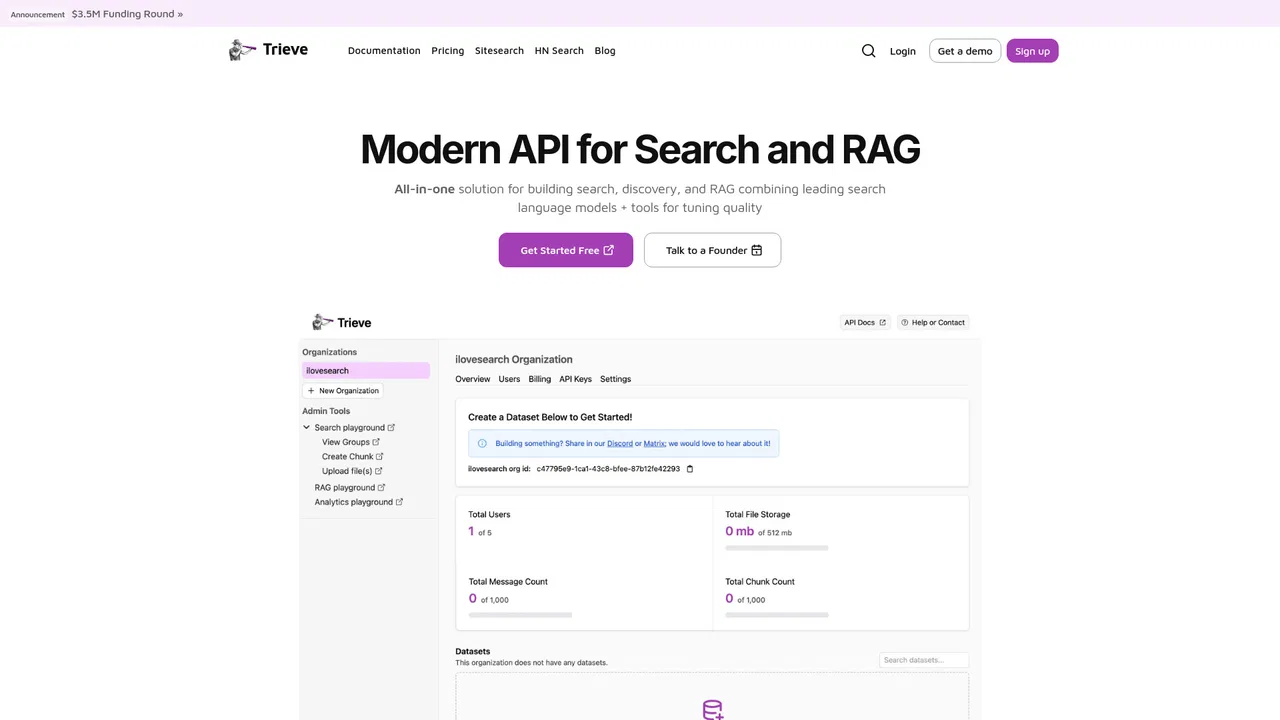
Free / Open-sourceSearch, discovery and RAG infrastructure for your product
Free / Open-sourceOpen-source AI memory that reasons, not just stores
The AI workspace where teams and agents get work done together
Free / Open-sourceBuild, run and manage AI agents — visually or in code

Free / Open-sourceEvery model, one key, and AI spending your team can actually control
Free / Open-sourceEvery model, one key, and AI spending your team can actually control